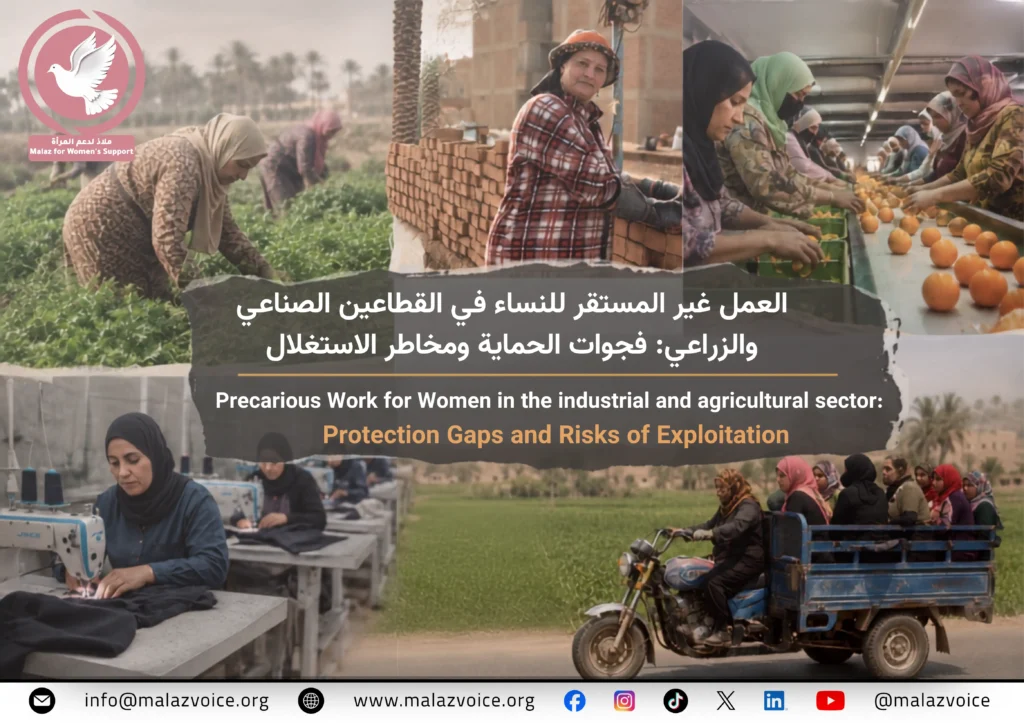
The policy paper “Precarious Work for Women in the Industrial and Agricultural Sectors: Protection Gaps and Risks of Exploitation” examines the realities faced by women engaged in precarious forms of employment within the industrial sector, including temporary and daily work, work through contractors and intermediaries, and forms of employment that do not provide women workers with a stable employment relationship or adequate social and occupational protection. The paper adopts a rights-based perspective that places women’s right to decent work and protection from exploitation at the center of its analysis, with a particular focus on the gap between the rights established by the legal framework and women workers’ actual ability to access and exercise those rights.
The paper demonstrates that the vulnerability inherent in an employment relationship extends beyond a lack of job security and may affect wages, working conditions, occupational safety and health, working hours, leave entitlements, social insurance coverage, and the ability to file complaints or claim rights. It also highlights the interaction of economic, social, and institutional factors that leave some women—particularly those employed in low-paid jobs and those more dependent on intermediaries or indirect forms of employment—at greater risk of exploitation and with limited access to protection and effective remedies. Accordingly, addressing precarious work requires treating it as an issue of labour rights and social protection, rather than merely as a form of employment.
The paper provides an assessment of existing protection gaps and proposes a range of policy interventions aimed at strengthening oversight of precarious forms of employment, improving women workers’ access to legal and social protection, enhancing occupational safety, and addressing practices of exploitation and discrimination. It also calls for the development of more effective reporting and complaints mechanisms and improved access to justice. This approach seeks to move beyond the mere recognition of women workers’ rights toward ensuring their effective implementation in practice, thereby contributing to a safer, fairer, and more stable working environment for women in the industrial sector.
|
|
|